AlICe

Research →
Teaching →
Media →
Filters : 3D model[x]
[x] Stoclet Palace’s kitchen: 3D restitution hypothesis (1911)
2025
Beyond the narrative: a workflow for 3D restitution of built heritage
2024
Architectural Analysis, Survey and Documentation of Built Heritage
2024
Survey and characterisation of the archaeological landscape of Lovo
2024
Stoclet 1911 - Restitution
2024
Stoclet 1911 - Hypothesis
2024
Drawing air: the evolution of the representation of air in architectural drawing from the industrial revolution to the present
2023
Architectural Analysis, Survey and Documentation of Built Heritage
2023
From projection to building and vice versa
2023
Anthropic Units in Baroque Architecture, the Gallery of the Palazzo Spada and the Roman Palm
2023
Crossed Experimentations of Low-Altitude Surveys For The Detection Of Buried Structures
2022
Misreading, once again...
2022
Towards a multi-scale semantic characterization of the built heritage
2021
Architectural Analysis, Survey and Documentation of Built Heritage
2020
Exploitation des numérisations pour l'analyse urbaine en contexte archéologique
2020
Architectural Analysis, Survey and Documentation of Built Heritage
2019
Exploitation de numérisations hétérogènes pour la représentation et l'analyse d'un site archéologique de grande échelle : Pachacamac 1532
2019
Relecture de vocabulaires d’architecture : apport de la complexité des représentations numériques dans la caractérisation de formes architecturales
2019
Places Royales Françaises. Réflexion d’une logique d’édification à travers une corrélation entre une analyse sémantique et un signal géométrique
2018
Le squelette de la Maison du Peuple : hypothèse de restitution 3D
2017
Espaces de processus/Espaces d'analyse. Description graphique de mécanismes géométriques compositionnels et représentationnels. Los Angeles dans les années 1980 : morceaux choisis
2017
Caractérisation de formes architecturales. Une approche expérimentale intégrant complexité et intelligibilité des représentations numériques
2016
Study and Rendition of Jean-Baptiste Hourlier's projection drawings
2016
Architectural Analysis & Computer Process IV
2016
Architectural Analysis & Computer Process III
2015
Immeuble Bessonneau à Casablanca - Hypothèse de restitution de l’état originel
2015
Reduce to Understand: a Challenge for Analysis and Three-dimensional Documentation of Architecture
2015
Analyse architecturale, modélisation 3D et narration filmique : un regard original sur quelques objets corbuséens
2015
Architectural Analysis & Computer Process II
2014
Education in Architectural Analysis through Hybrid Graphic Means: a Setup for Critical Thinking
2014
Architectural Analysis & Computer Process I
2013
Aménagement du Hall des Beaux-Arts par Lucien-Jacques Baucher
2013
La complexité inhérente aux modèles numériques et le paradigme de la représentation architecturale - Brèves considérations sur les pratiques contemporaines
2012
Jacques Dupuis & Albert Bontridder - 3D short movies
2011
Photomodélisation de la Maison de Verre de Paul-Amaury Michel
2010
Architectural analysis and relevance of digital representation techniques - An educational experiment
2007
Peter Eisenman's Houses I to X
2002

Stoclet Palace’s kitchen: 3D restitution hypothesis (1911)

Supervisor: David Lo Buglio

Submitted on September 2025

Original title: Le Palais Stoclet de Josef Hoffmann : Hypothèse de restitution numérique de la cuisine à son état de 1911.

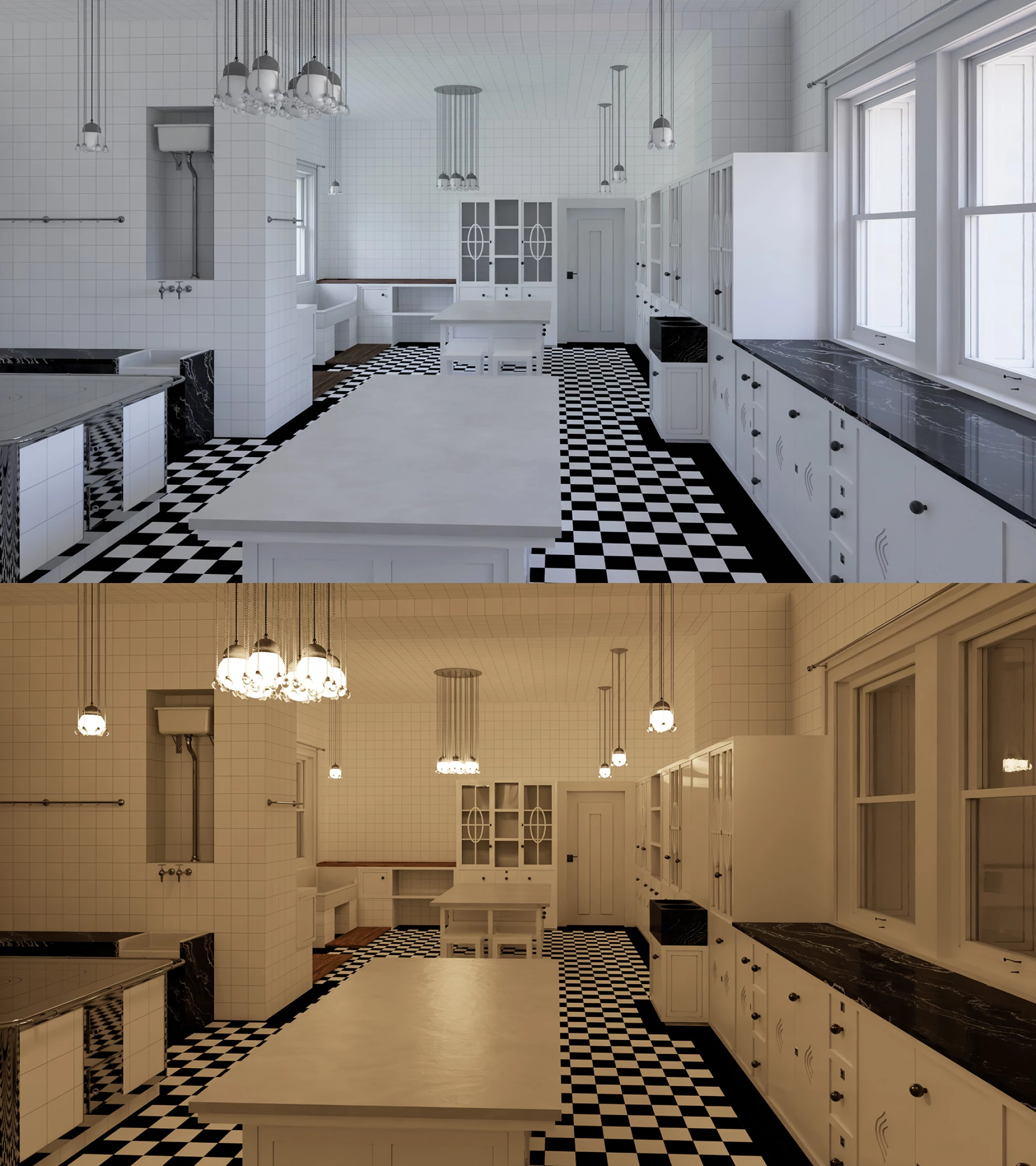
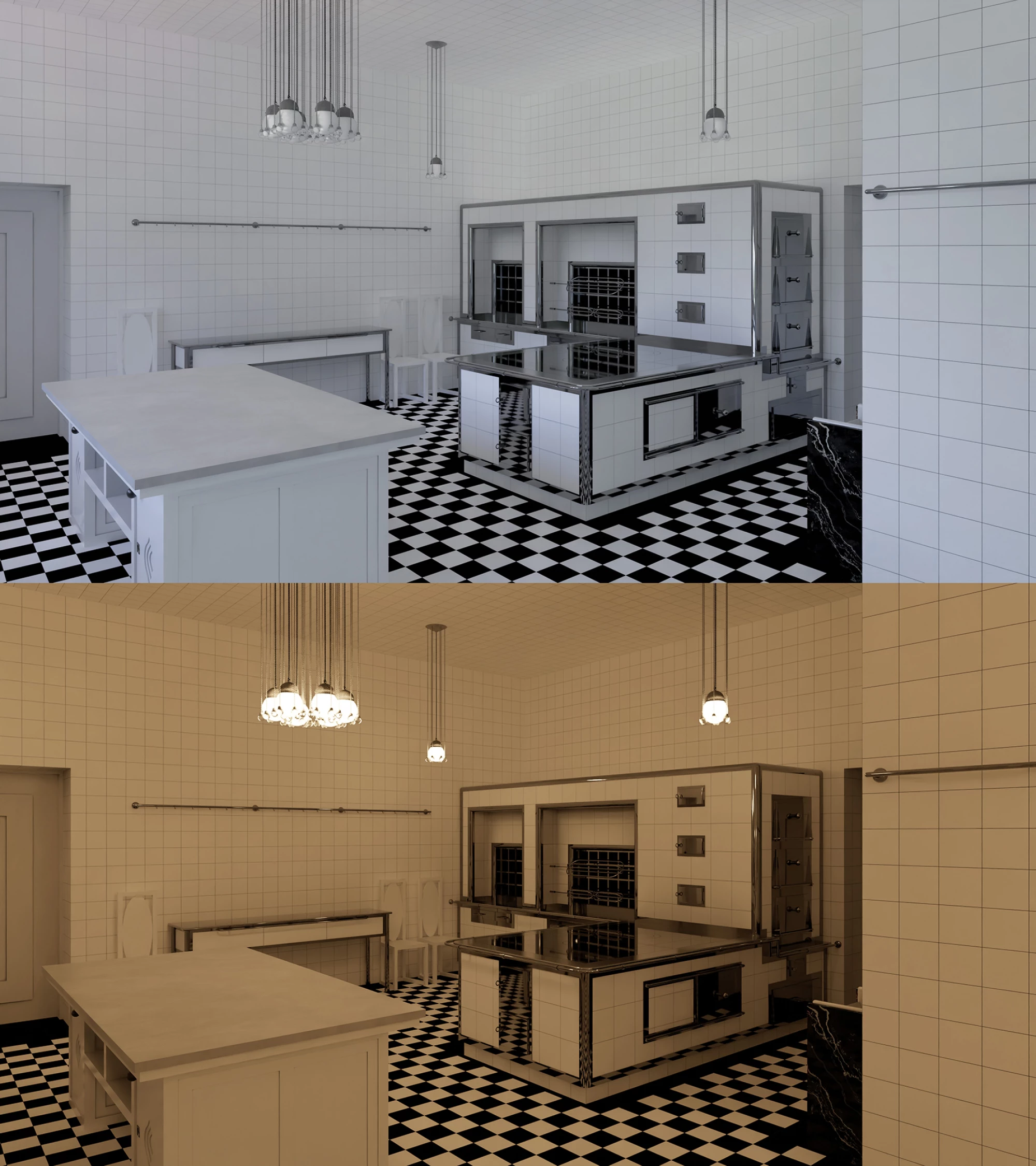
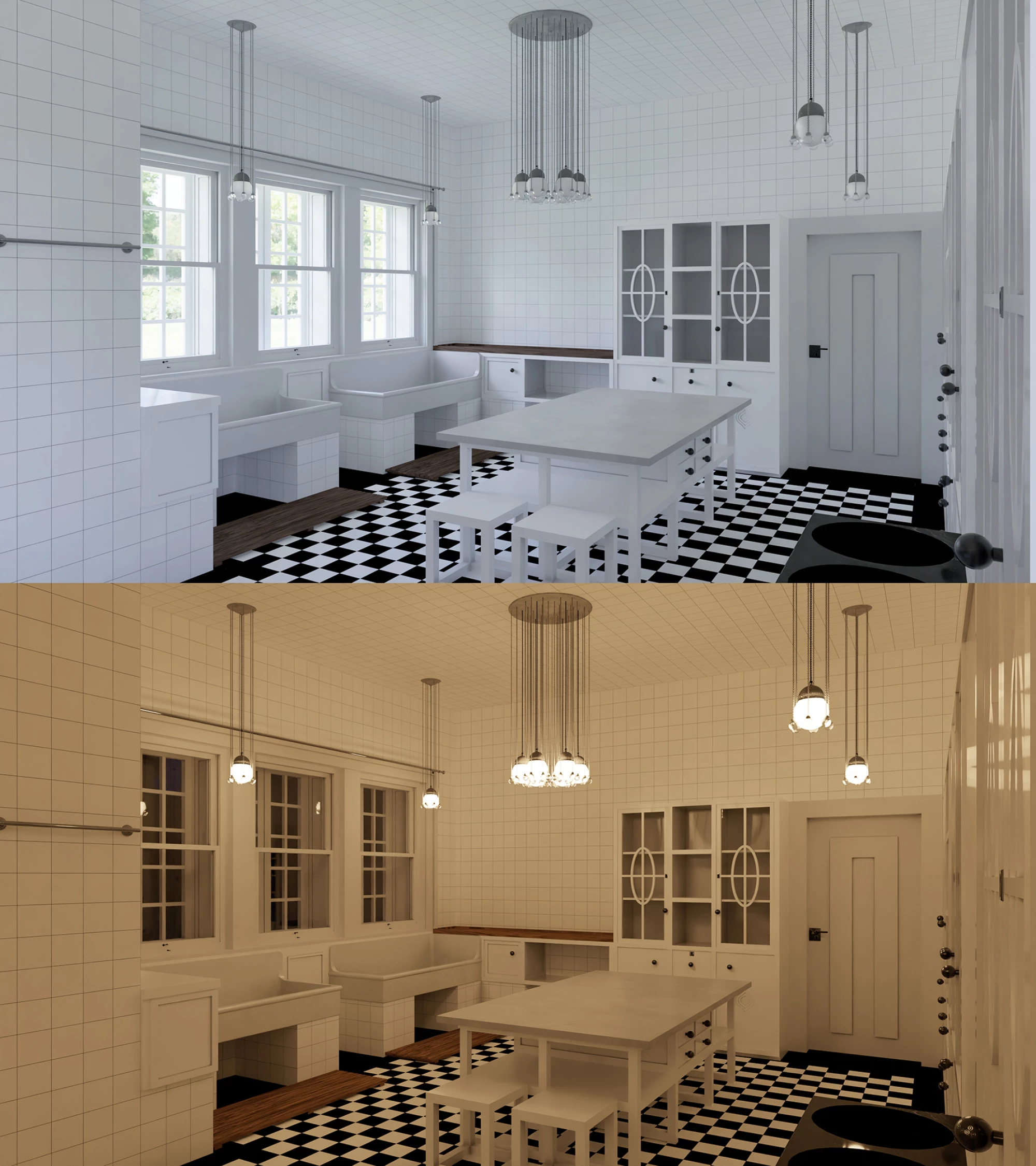
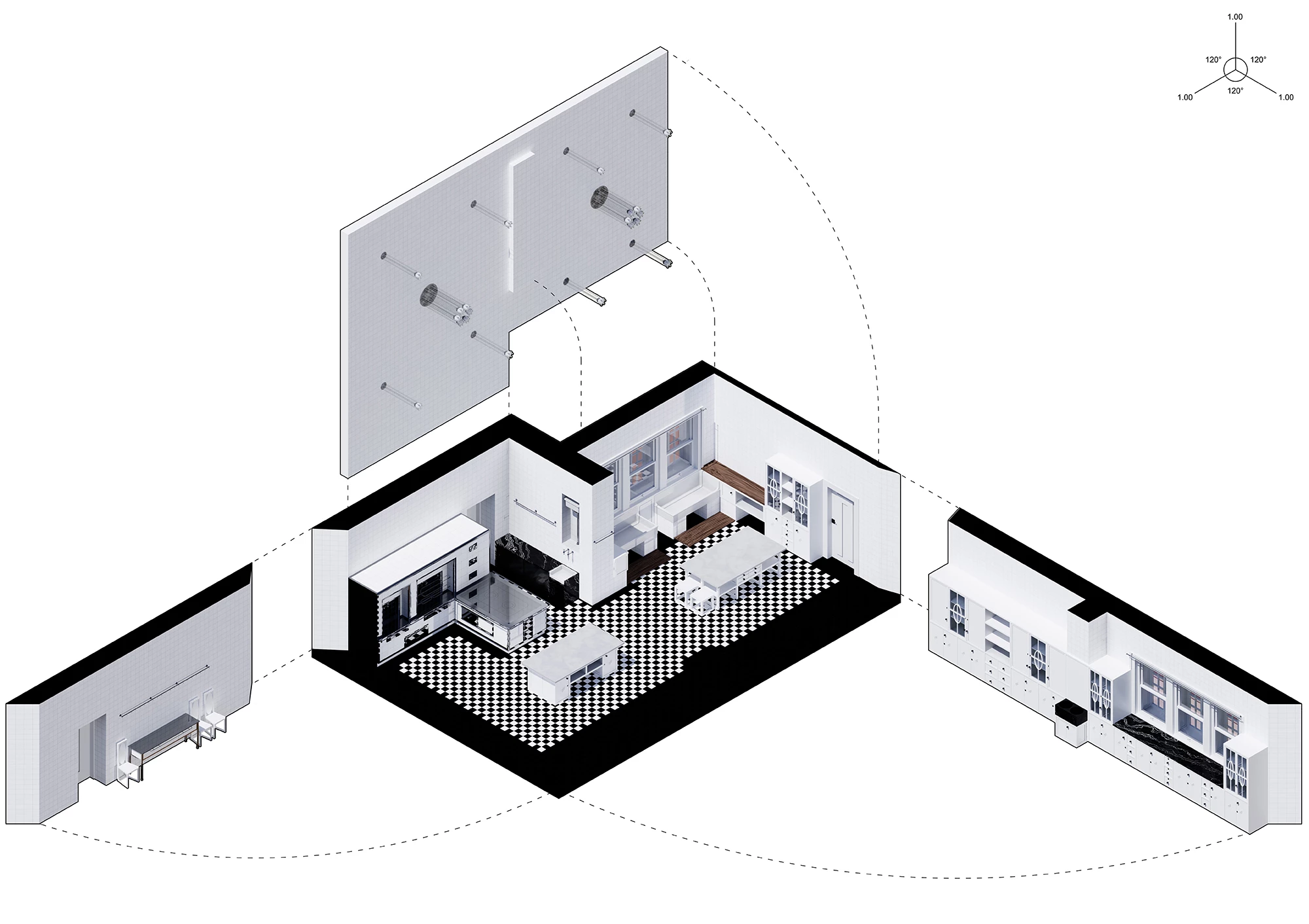
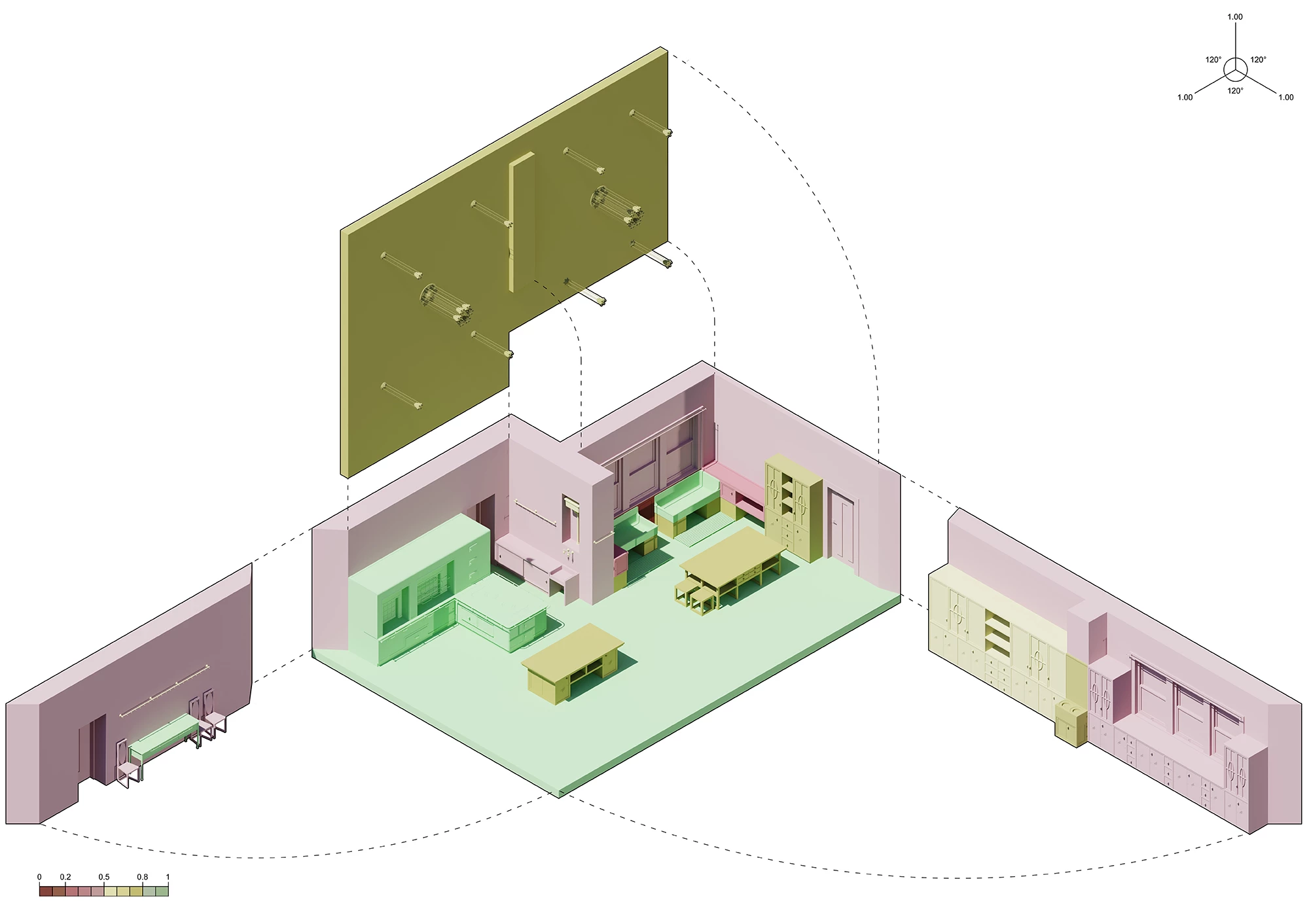
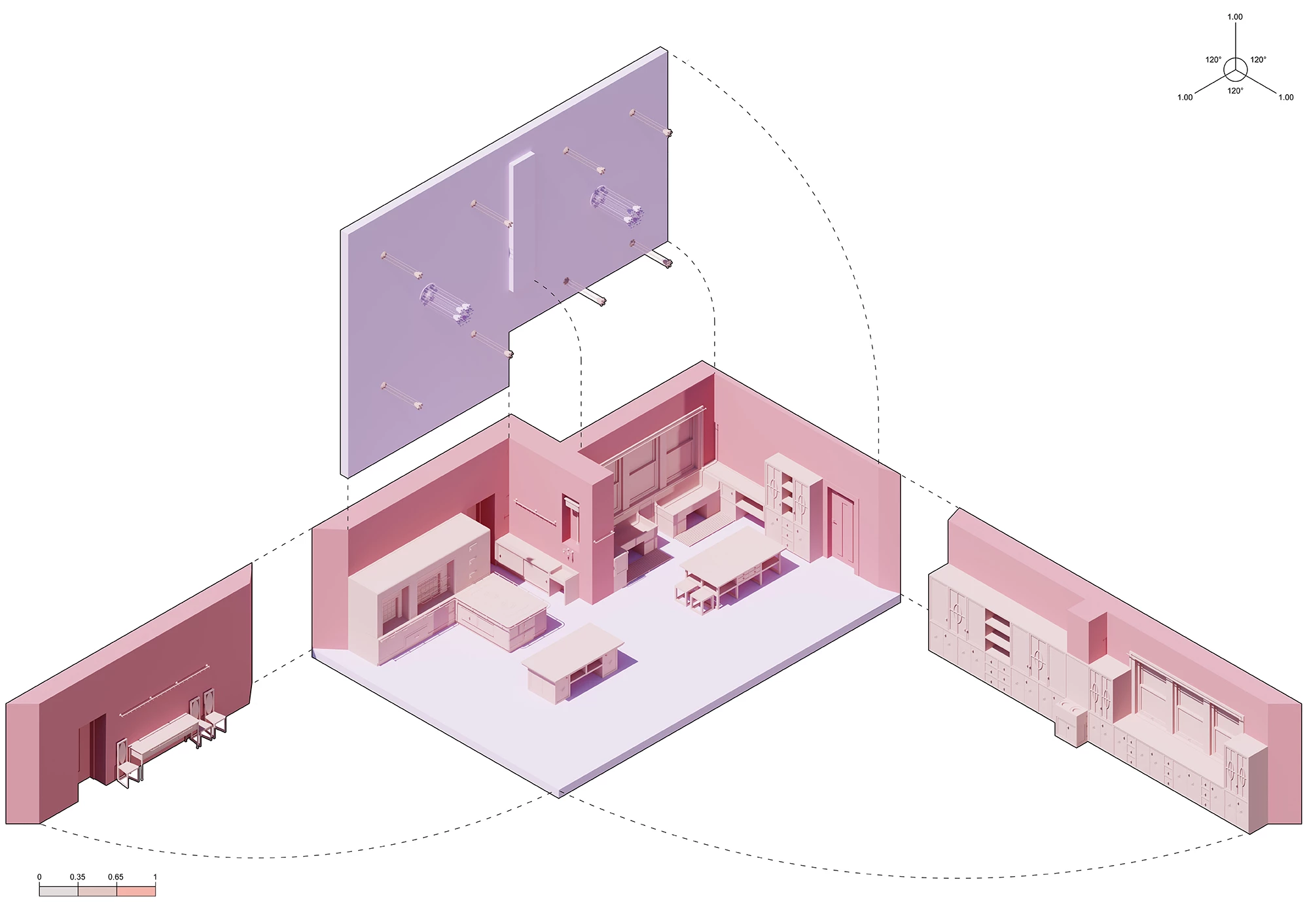
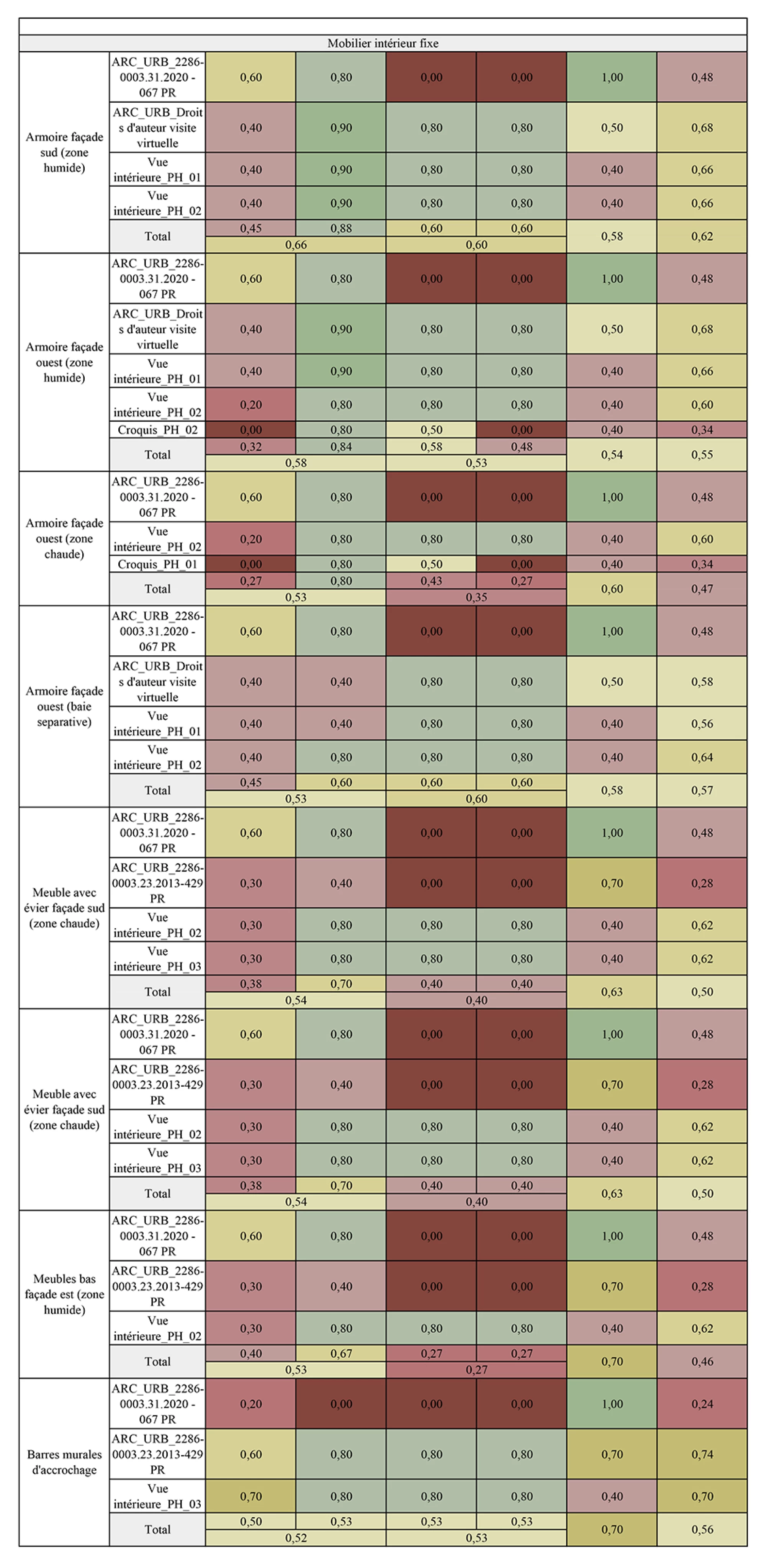
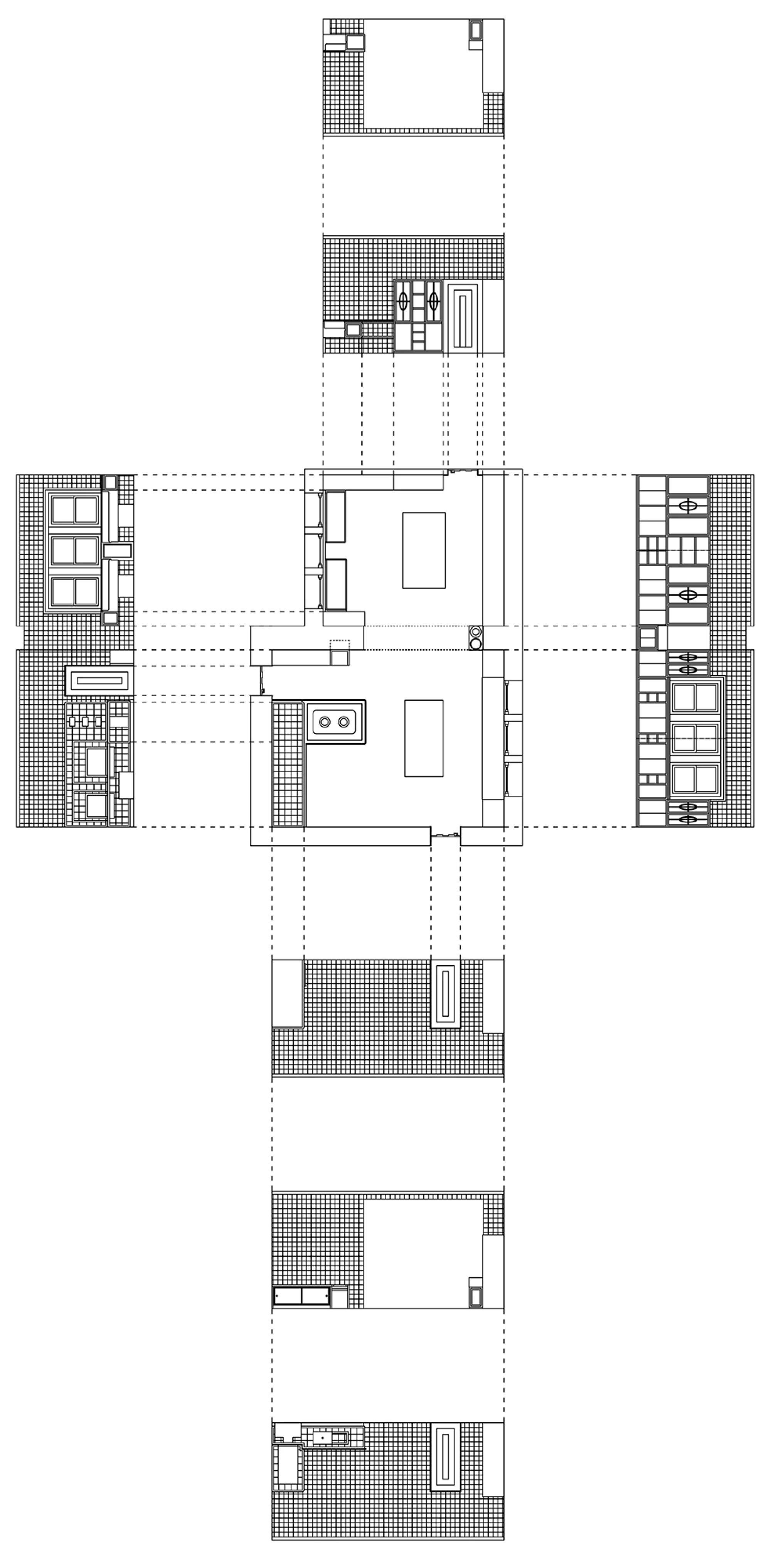
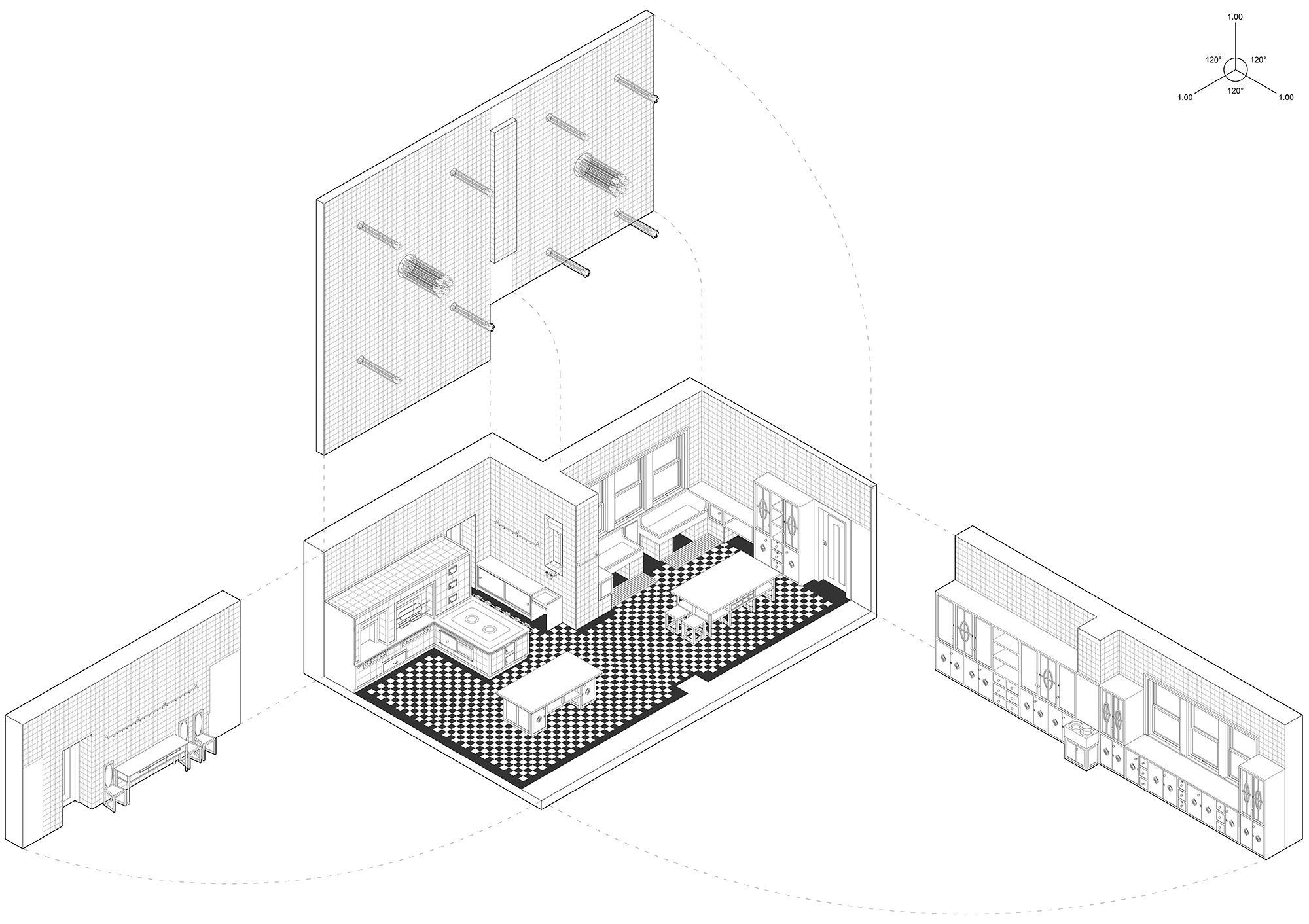
This master’s thesis proposes a digital restitution hypothesis of the Stoclet Palace's kitchen, designed by the architect Josef Hoffmann. A major work of the Viennese Secession and listed as a UNESCO World Heritage Site since 2009, the interior of the building remains largely unknown to the general public. Developed as a continuation of the research project “Stoclet 1911 – Restitution”, conducted in collaboration between urban.brussels and the ULB – Faculté d’Architecture La Cambre-Horta, this thesis focuses on a secondary yet functionally essential space of the palace that has been less documented than its well-known ceremonial rooms. The study is based on the precise analysis of a heterogeneous corpus of archival sources, including historical photographs, technical drawings, and written records from Belgian and Austrian archives. It aims to produce a realistic 3D restitution of the kitchen (representing a hypothetical state of the room between 1911 and 1918 rather than its current condition), thereby reinforcing the immersive quality of the model. Particular attention is given to the methodological process, from archival interpretation to digital modeling and visual restitution. Furthermore, the research addresses the challenges of incomplete and fragmented documentation by assessing and representing uncertainty. This is achieved through the use of evaluation scales – such as degrees of certainty and distance to sources – allowing each element of the model to be critically qualified.